ecoSUB Robotics
  • Home
  • Products
    • ecoSUBu5 - 500 m rated Micro-AUV
    • ecoSUBm5 - 500 m rated Small-AUV
    • ecoSUBm25 - 2,500 m rated Small-AUV
    • Scout Series (Survey)
    • Science series >
      • ecoSUBu5-Science Series
      • ecoSUBm-Science Series
    • Hydrocarbon Sniffer Series
    • Power+
    • ecoSUB C3 GUI
    • Hermes C3
    • Network Localisation & Advanced Navigation
    • Request a quote
    • FAQs
  • About us
    • Our Team
    • Advisory Board
    • Career @ ecoSUB
    • WWF GhostNetZero
  • News
  • Gallery
  • ecoSUB TV
  • Support
  • Contact
    • Contact
    • International Sales

ecoSUB news

ecoSUB in Croatia - Breaking the Surface & Successful Missions

14/10/2019

0 Comments

 
Iain and Jeremy from ecoSUB were joined in Biograd na Moru, Croatia by Alex Phillips and Davide Fenucci from NOC, as well as Jeff Neasham and his team from Newcastle University, all partners in our recent Innovate UK project to develop network localisation for advanced positioning and navigation of ecoSUB AUVs.
The group were all attending Breaking the Surface, an interdisciplinary marine robotics workshop held between 29 Sep - 5 Oct.  The event supports the opportunity to run trials throughout the week with colleagues from Zagreb University providing first class support and access to the resort facilities.

ecoSUB hosted three demo sessions to delegates, and provided a talk on network localisation, which included some outstanding data collected from the local waters. 

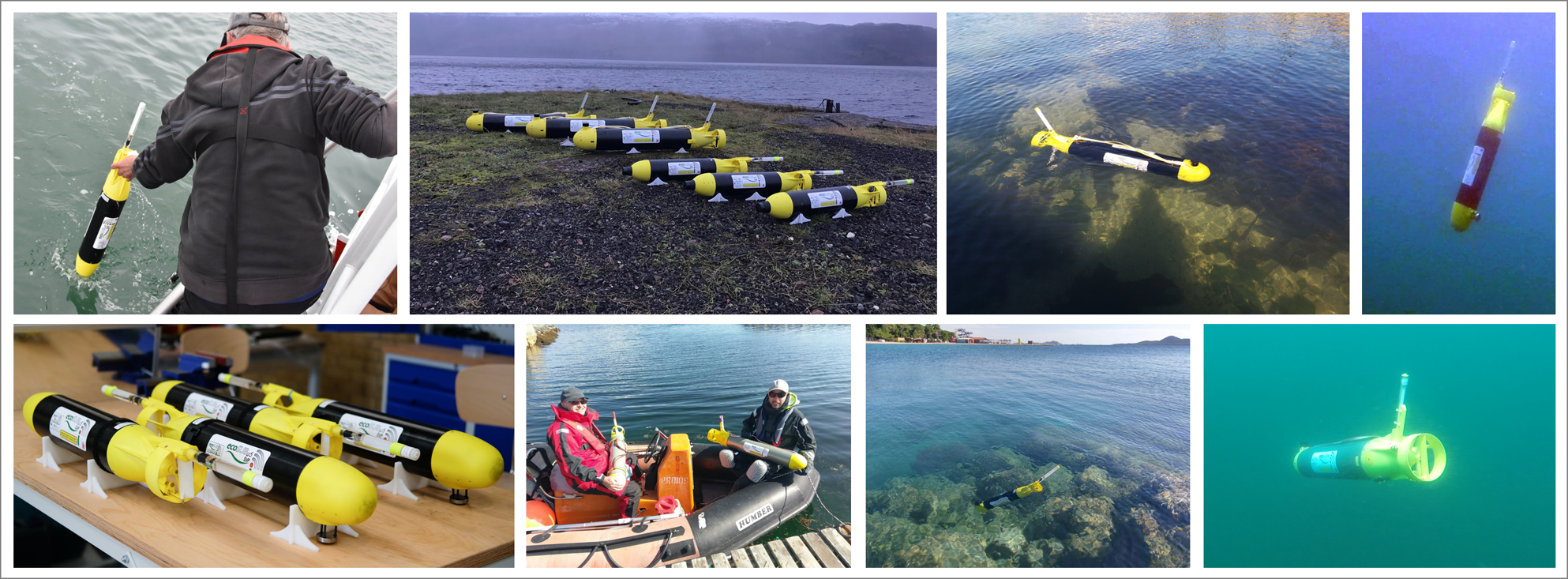
Seven ecoSUB AUVs travelled with the team and six operated together within the network, producing some excellent track lines following complicated lawnmower patterns and demonstrating multi-vehicles operations.  At the end of the week the team extended the network into the waters between Biograd na Moru and the nearest large island, Pašman, successfully completing a three hour mission. 

Our many thanks are extended to the Breaking the Surface team for hosting such a great event.
0 Comments

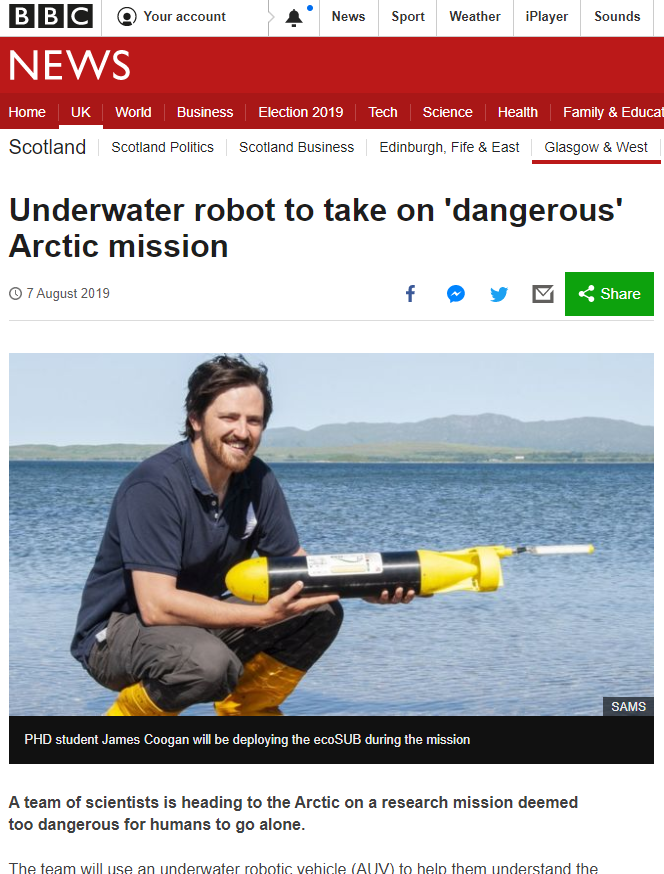
BBC News story on SAMS work in the Arctic with ecoSUB

7/8/2019

0 Comments

 
Click here to view full article
Picture
0 Comments

To dangerous for humans, send in ecoSUB

5/8/2019

0 Comments

 
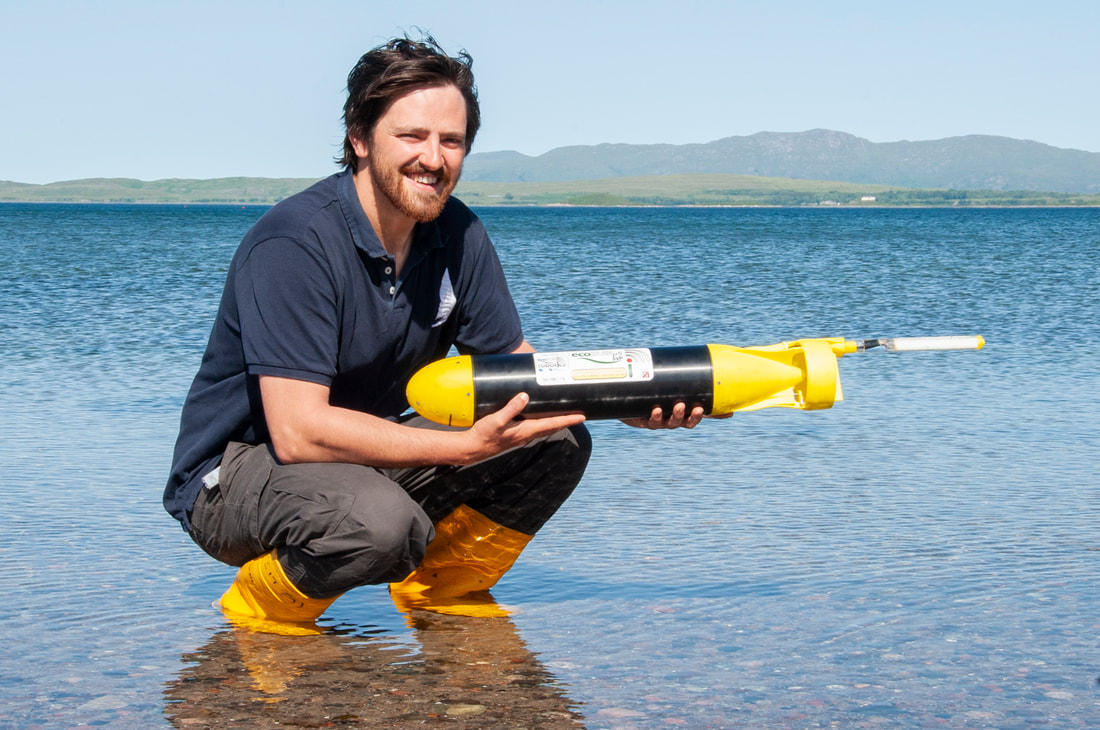
An ecoSUB underwater robotic vehicle owned and operated by the Scottish Association for Marine Science will go on an Arctic research mission deemed too dangerous for humans in a bid to help scientists understand the true extent of melting from Arctic glaciers.

The team from (SAMS) in Oban, led by oceanographer Prof Mark Inall, will deploy an ecoSUB to the foot of a melting glacier in Arctic Norway. The aim is to learn more about the effect of meltwater on a process called ‘calving’, which causes huge chunks of ice to break off the glacier edge.

Less than a metre in length and just four kilogrammes in weight, the ecoSUB will enter one of the most hostile environments on the planet to take measurements such as temperature and salinity as far down as 100 metres below Kronebreen glacier on Svalbard. The work will give researchers a clearer picture of how warming ocean properties affect the calving process.

Prof Inall said: “Given the importance of Arctic glacial ice melt in terms of climate change and sea level rise, the interaction between melt water and sea water beneath glaciers is hugely understudied. We have satellite images and models that help to predict the extent of ice loss but it is extremely important to ‘ground-truth’ these predictions by investigating conditions in the field.

“It would simply be too dangerous to go into such a hostile and remote environment with a boat. Not only is there a risk of falling ice, but large-scale calving causes huge waves, so it is a dangerous environment. That is where the ecoSUB will come into its own, working at the front line of Arctic science.”

ecoSUB’s readings will help researchers better understand the process of sub-glacial discharge, a term given to melt water that flows down through the glacier and out into the ocean. This water is fresher than the surrounding sea water, so starts to rise in the water column, creating a plume that pulls in warmer Atlantic water. As it rises, it circulates and creates a sandpaper effect against the face of the glacier. This process undermines the wall of ice, causing huge chunks to collapse into the sea.

SAMS will also deploy a larger AUV further from the glacier to take more detailed measurements and a drone will take aerial images of the glacier to help build a 3D map, whilst capturing a bird’s-eye view of calving events.

James Coogan, a University of the Highlands and Islands PhD student at SAMS, will be operating the ecoSUB. He said much of the current understanding of sub-glacial discharge was based on mathematic models. “We want to get direct measurements of these plumes,” he added. “How much fresh water is coming out of the glacier? How much of an effect is this having on the fjord water? How much heat and salt is in the water flowing in? “These are questions we can answer to an extent with models but we need to check these conclusions with real data from the field. That hasn’t been feasible, until now.”

The team travels to Svalbard on Wednesday, August 7.
0 Comments

Plymouth trials update

15/7/2019

0 Comments

 
Picture
Picture
Picture
Picture
Picture
Picture
Picture
Picture
Picture
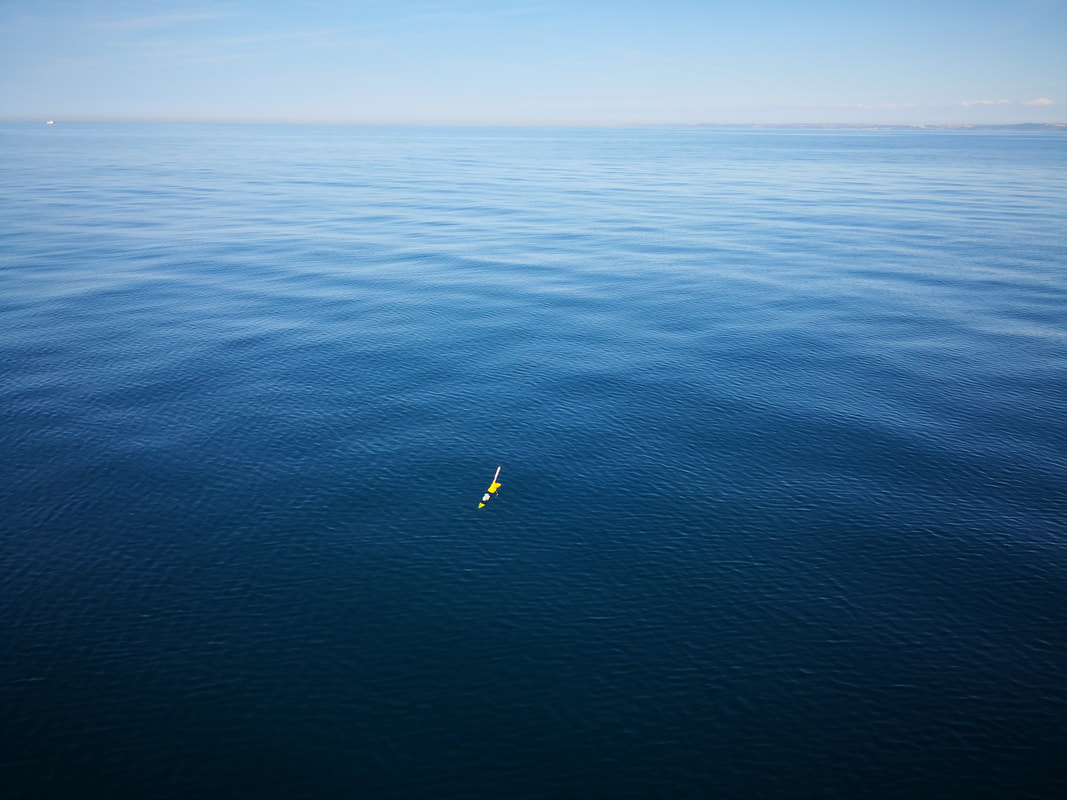
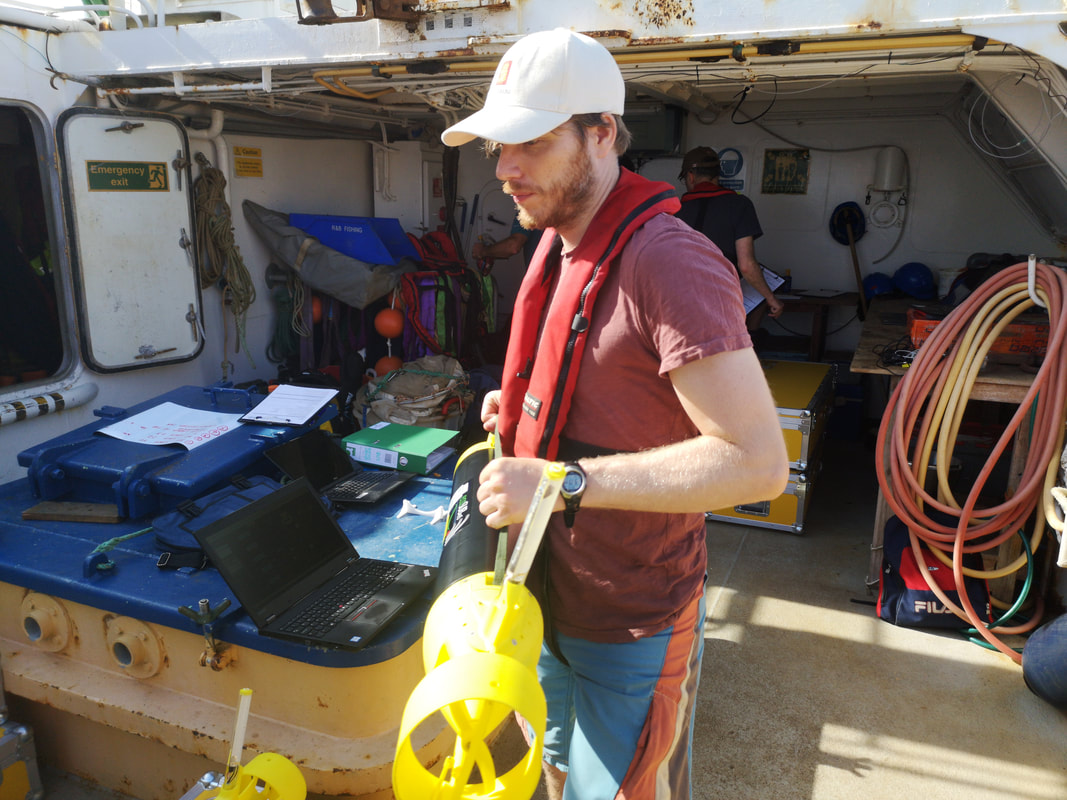
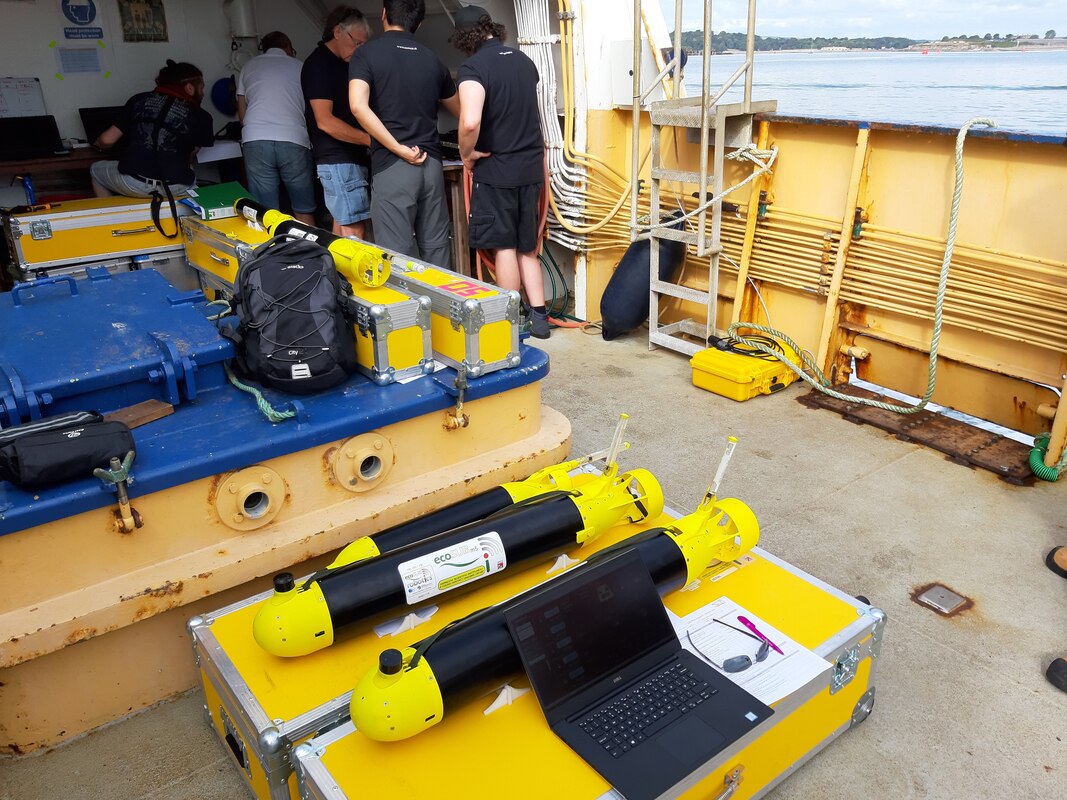
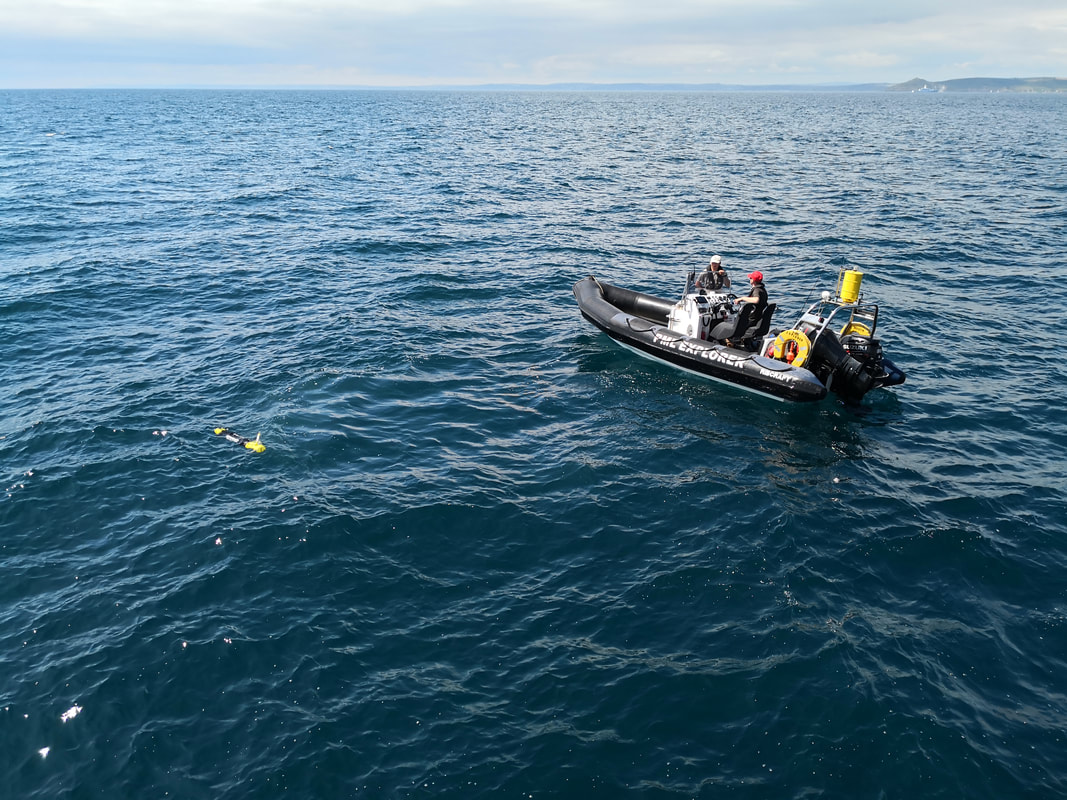
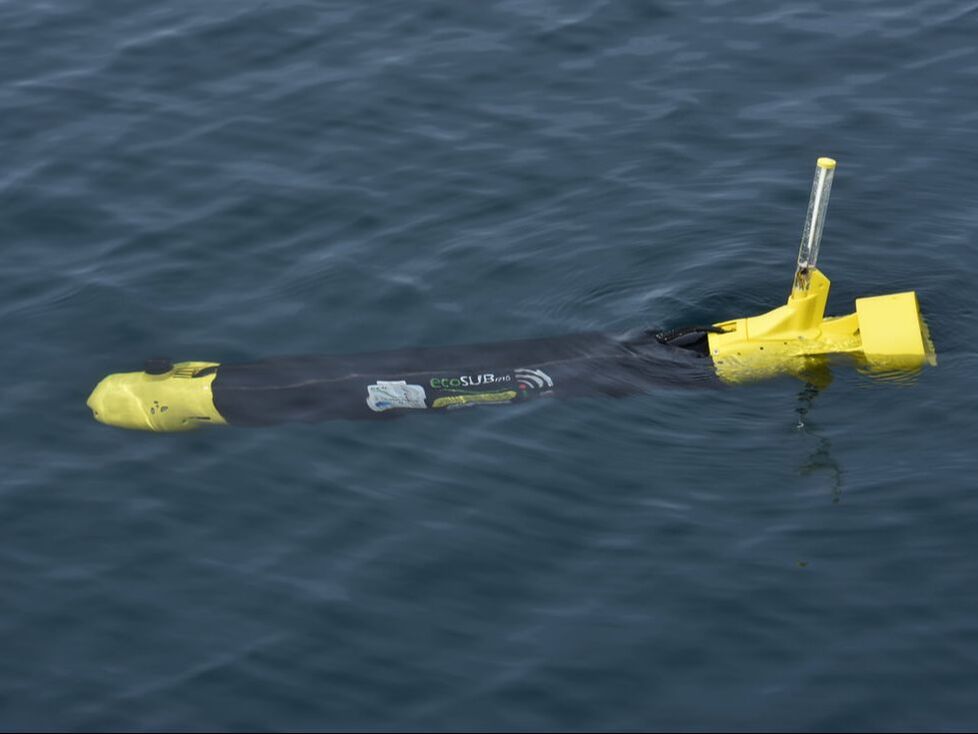
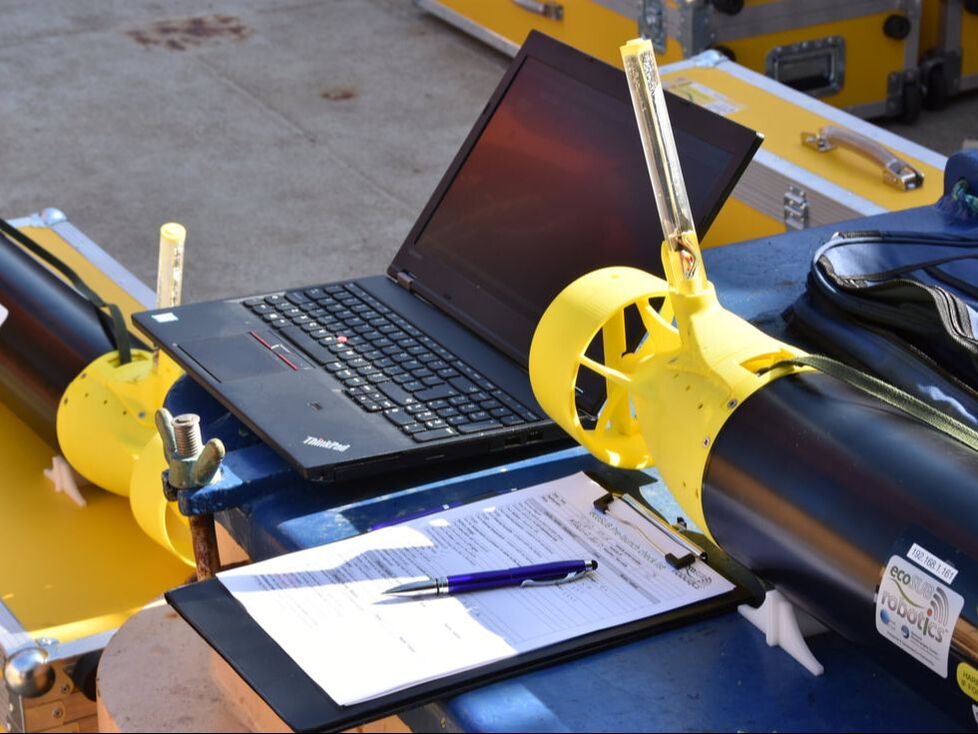
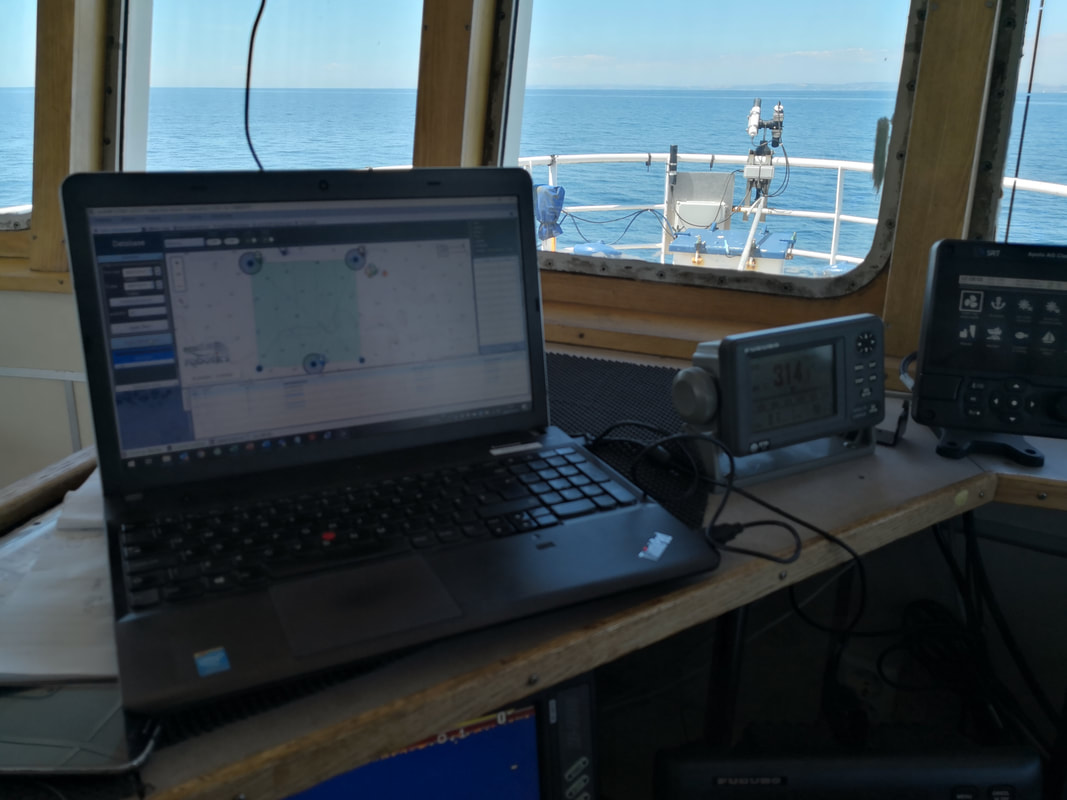
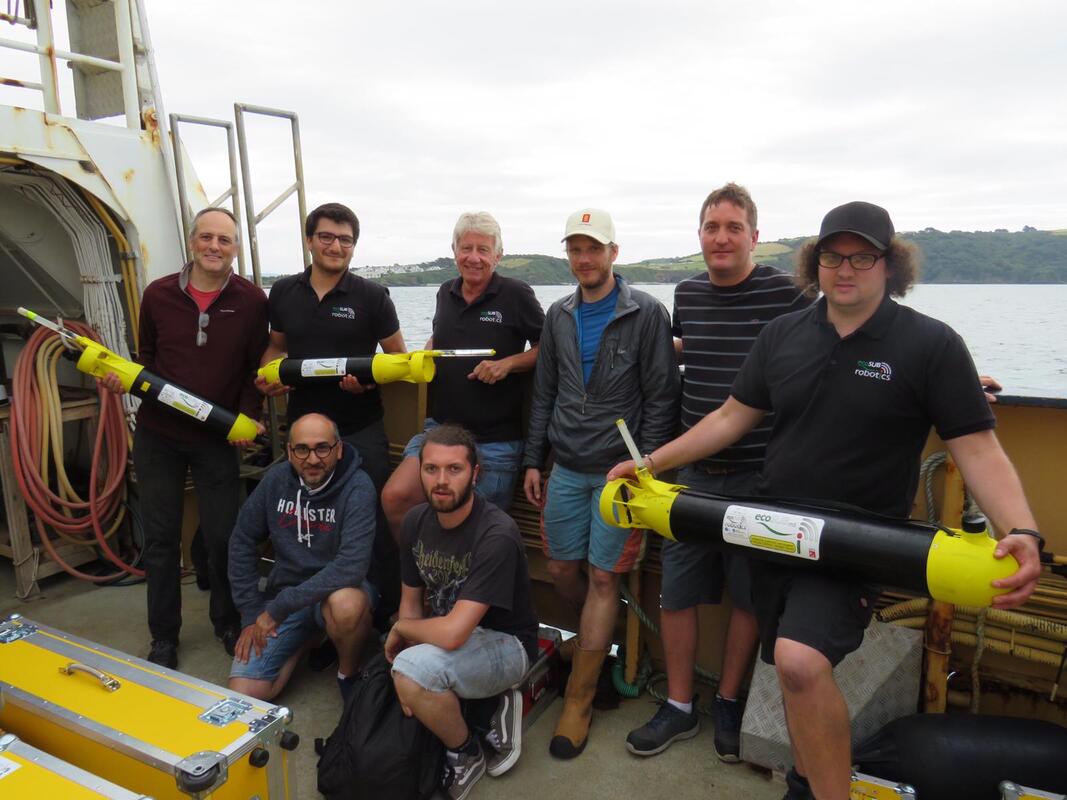
We spent much of last week at sea extending our testing of our underwater acoustic localisation and navigation system.  We had an ambitious target to get 10 of our ecoSUBs in the water operating together within a network, unfortunately we only got to six before we ran out of time on the water :( 
We had many successes during the week and will be back out soon to finish off the mission!
Our many thanks to Smart Sound Plymouth for use of Plymouth Quest, PML Explorer and the Smart Sound Laboratory based at Plymouth Marine Lab (PML).  Our special thanks to James Fishwick of PML/Smart Sound for all his help and support with coordination, logistics and piloting PML Explorer.
0 Comments

July 06th, 2019

6/7/2019

0 Comments

 
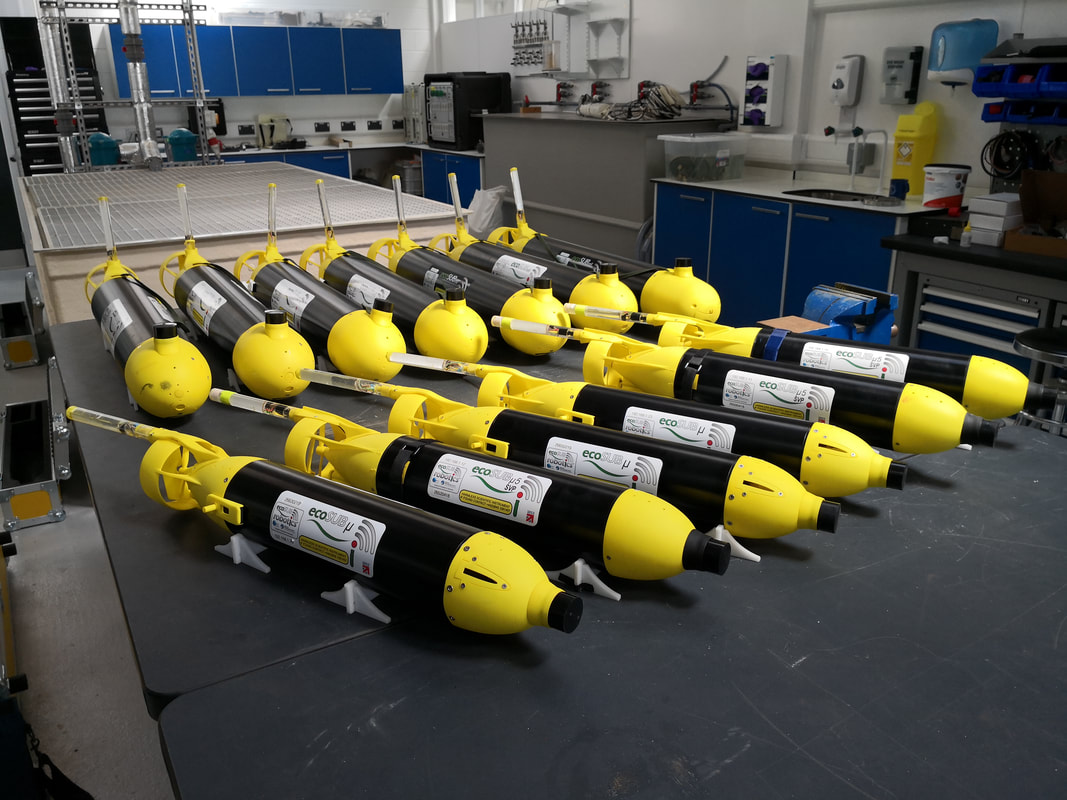
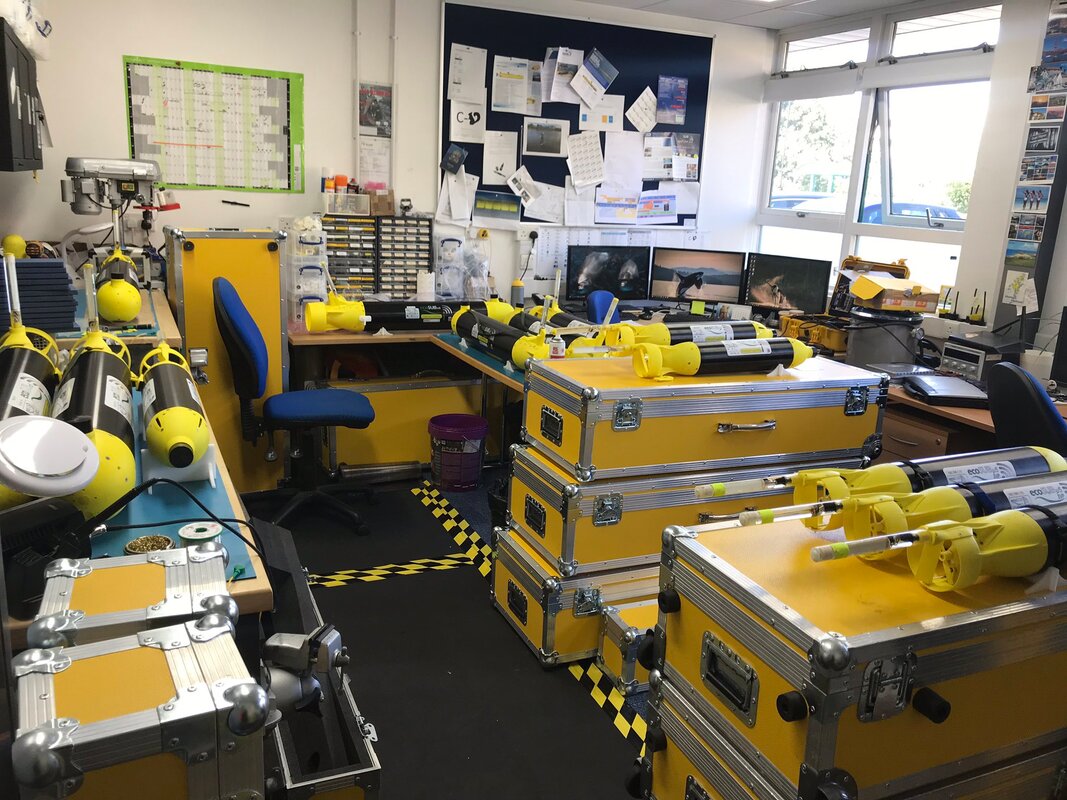
Friday afternoon and 13 ecoSUB AUVs are all ready for next week where we will be running 10 together for a Rapid Environmental Characterisation Test. In two hours we will provide a multi depth lawnmower survey of a 1km x 1km box collecting data on the concentration of hydrocarbons and Chlorophyll. Watch this space for some exciting results...
Picture
0 Comments

Successful trials in Plymouth

26/6/2019

0 Comments

 
Picture
Picture
Jeremy, Alex, Iain and Ayanna from ecoSUB, joined by Davide Fenucci from the National Oceanography Centre were offshore from Plymouth this week, running tests with our Smart Network Positioning system.

Three ecoSUBu5 AUVs were deployed in a network as part of this test, with three vehicles operating a station holding behaviour on the surface to provide GPS via nano-modems developed by Jeff Neasham at University of Newcastle.  The forth vehicle, an ecoSUBm5, receiving position information from the surface units triangulated it's position and fused this data with its own dead reckoner to greatly enhance navigation capability.

During one of these tests we completed a 5km lawnmower survey at 30m depth.

Next month we will be supported by PML, operating on Plymouth Quest, where we will be launching TEN ecoSUB AUVs to complete a Rapid Environmental Assessment test, accurately surveying a 1km x 1km box at multiple depths in approximately 2 hours.
Smart Network Positioning is an output from an 18 month Innovate UK supported project. Project partners are Planet Ocean Limited, National Oceanography Centre and University of Newcastle. We've done really cool things to make low cost, smart AUV technology even more useful and accessible.

To find out more email us via [email protected]
0 Comments

Production systems available from 1 September 2019

14/6/2019

0 Comments

 
Production versions of ecoSUB AUVs will be available from September 2019.  

Many thanks to all our early adopter customers, who along with our busy trials team, have given our advanced prototype systems some excellent early testing.  Our production versions feature significant enhancement to their usability and robustness, as well as some excellent work on the vehicles hydrodynamics and propulsion to boost efficiency through water and some awesome upgrades to our electronics which will enable more compatibility with multiple payloads as well as some substantial improvement on power management.

Many thanks to our dedicated engineering team, the vision & guidance of our founder & MD Terry Sloane and the technical leadership of Dr Alex Phillips, National Oceanography Centre, and Jérémy Sitbon, ecoSUBs Chief Robotics Engineer.

We have appreciated all the interest ecoSUB has received from all corners of the world, and now look forward to being able to start taking orders and letting our customers get their hands on our low cost, smart AUV systems.

To request a quote for any of our ecoSUB AUVs please click here
Picture
0 Comments

100% Sound Velocity Profile Data from ecoSUB

17/12/2018

1 Comment


Royal Navy supports successful trial of new micro-robots – ecoSUB provides 100% data for MASSMO 5b
Picture
Picture
Picture
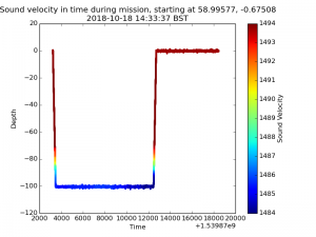
The plot here shows a three hour mission at 100m with SVP data acquired throughout with a down-cast and up-cast at the start and finish of the mission clearly showing the depth of the thermocline.   A complete SVP profile can be sent in a single Iridium SBD message due to some clever compression techniques.
Click here for details
ecoSUB, has been successfully trialled in the North Sea off Orkney during a marine robot demonstrator mission co-ordinated by the National Oceanography Centre (NOC).

ecoSUB is a new type of Autonomous Underwater Vehicle (AUV) developed by Planet Ocean in partnership with the NOC. The vehicles are around 0.5 metres in length and weigh only 4 kg, and are therefore classified as ‘micro-AUVs’. Despite their small size, they are capable of diving to 500 m (2500m for ecoSUB-m25) and have sufficient battery power to stay underwater for several hours.

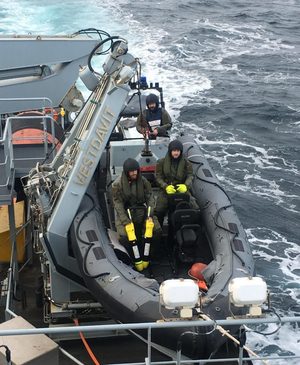
Two of the new ecoSUB-µ5-SVP vehicles were deployed from the Royal Navy’s HMS Enterprise during the trial and successfully collected Sound velocity profile data to depths of 100 m. These data will be compared with those collected by traditional ‘over-the-side’ instruments deployed from the ship, allowing the Royal Navy and the Defence Science and Technology Laboratory (Dstl) to assess the benefits of this new robotic technology.

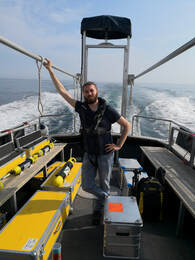
Whilst the subs were deployed and recovered by the RN, initially the vehicles were piloted by our senior software engineer Jérémy Sitbon on board the Enterprise, but following his departure, further deployments were undertaken from Enterprise with piloting done remotely from NOC over the Iridium satellite.

Terry Sloane, Managing Director of Planet Ocean, said: “Micro-AUVs are low cost and highly flexible platforms with the potential to transform data collection across the maritime sector. This demonstrator mission provided a fantastic opportunity for us to deploy ecoSUBs from a Royal Navy vessel in challenging conditions, and we are delighted at the quality of data obtained and the ease with which the vehicles were released and recovered.”
​
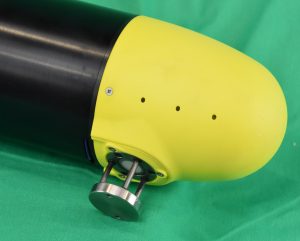
The ecoSUB-µ5-SVP carries a Valeport time of flight sound velocity sensor which is ideally suited for use on the ecoSUB vehicle.  A unique feature of ecoSUB-µ5 is its ability to dive almost vertically, in a spiral with a very small footprint, allowing water column profiles to be captured.  Traditional AUVs and gliders have relatively shallow dive angles which means that they need to travel horizontally some distance whilst acquiring data.

1 Comment

Now you can follow us on Instagram

3/8/2018

0 Comments

 
Picture
ecosubrobotics
0 Comments

Foreign Secretary briefed on ecoSUB

5/7/2018

0 Comments

 
Picture
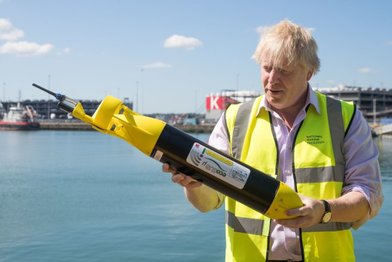
Foreign Secretary Boris Johnson was the latest VIP to visit the NOC where he got a closeup look at ecoSUB-u and announced an ambitious plan to bring together all of the Government's international oceans work under a single strategy for the first time.
​

The Government will agree and implement a new oceans strategy, under the aegis of the FCO, which will cover work from departments including Defra, BEIS, DfT and DIT. The strategy will be developed over the coming months. Responding to the recommendation from the Government Chief Scientific Adviser to develop a more strategic approach to marine and maritime policy, it will provide a blueprint for international action by HMG towards the oceans that supports the long-term prosperity of the UK and the long-term health of the marine environment.

0 Comments
<<Previous
Forward>>

    ecoSUB news

    Keep up to date with news from the ecoSUB Robotics team

    Archives

    June 2025
    October 2023
    November 2022
    October 2022
    September 2022
    August 2022
    April 2022
    March 2022
    February 2022
    November 2021
    July 2021
    May 2021
    March 2021
    December 2020
    November 2020
    October 2020
    July 2020
    December 2019
    November 2019
    October 2019
    August 2019
    July 2019
    June 2019
    December 2018
    August 2018
    July 2018
    March 2018
    June 2017
    April 2017
    March 2017

    Categories

    All

    RSS Feed


Home
Products
About
​
Warranty
News
Contact
ecoSUB Robotics is a division of Planet Ocean Limited | Company Number 4831755 
Unit 16, Bracebridge, Camberley Business Centre, Camberley, GU15 3DP, UK
© ​​ Copyright 2026 all rights reserved
​cookies & privacy
Picture
Picture
  • Home
  • Products
    • ecoSUBu5 - 500 m rated Micro-AUV
    • ecoSUBm5 - 500 m rated Small-AUV
    • ecoSUBm25 - 2,500 m rated Small-AUV
    • Scout Series (Survey)
    • Science series >
      • ecoSUBu5-Science Series
      • ecoSUBm-Science Series
    • Hydrocarbon Sniffer Series
    • Power+
    • ecoSUB C3 GUI
    • Hermes C3
    • Network Localisation & Advanced Navigation
    • Request a quote
    • FAQs
  • About us
    • Our Team
    • Advisory Board
    • Career @ ecoSUB
    • WWF GhostNetZero
  • News
  • Gallery
  • ecoSUB TV
  • Support
  • Contact
    • Contact
    • International Sales